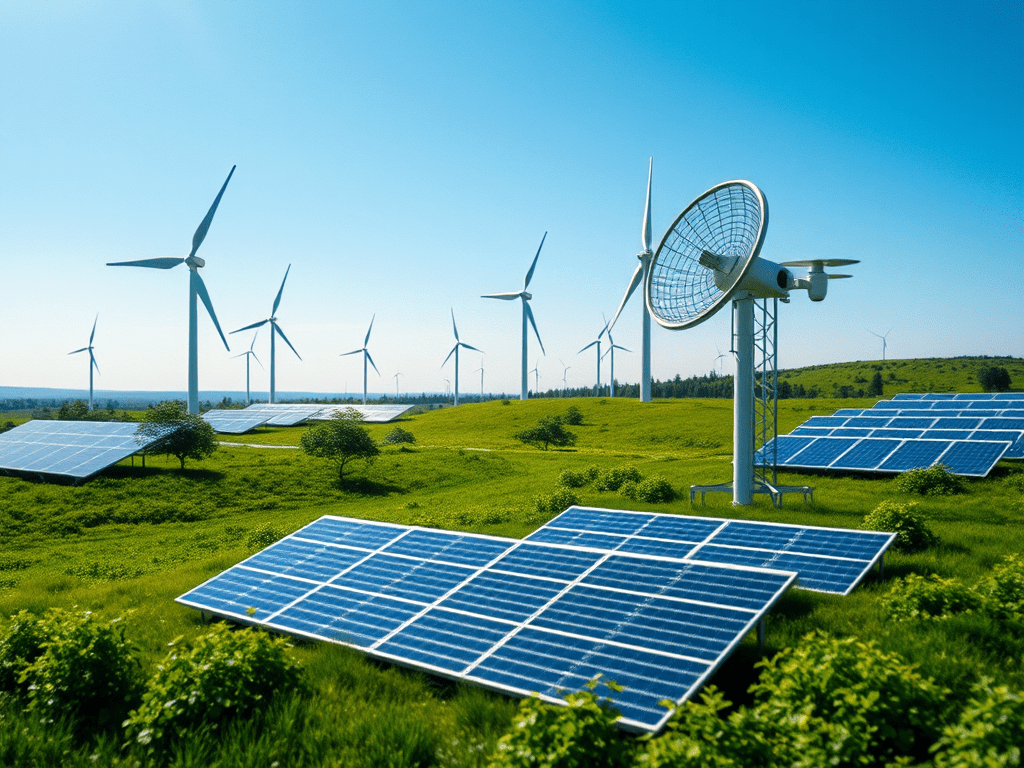


Artificial intelligence is rapidly becoming a key tool in addressing environmental challenges. Its ability to quickly process vast amounts of data and provide insights into complex systems offers promising solutions for issues like climate change, biodiversity loss, and pollution. For instance, AI can optimize renewable energy usage by predicting energy demand and adjusting supply from solar and wind power. This helps reduce dependence on fossil fuels and minimizes waste in energy distribution. AI’s applications also extend to agriculture, where it enhances precision farming, allowing for more efficient use of water, fertilizers, and pesticides. This leads to higher yields with a lower environmental footprint. In environmental monitoring, AI is being employed to track deforestation, monitor air quality, and assess wildlife populations. By leveraging satellite imagery and machine learning algorithms, AI can identify patterns of environmental degradation, enabling governments and organizations to respond more swiftly. AI-driven platforms such as the International Methane Emissions Observatory provide valuable data on greenhouse gas emissions, helping policymakers make informed decisions on how to curb pollution.
However, while AI holds significant potential for environmental benefits, its own environmental impact cannot be overlooked. Training AI models requires significant computational resources, leading to high energy consumption. Large-scale AI models, particularly those used in areas like natural language processing and image recognition, are energy-intensive, contributing to carbon emissions. Some studies have shown that training certain AI models can produce as much carbon dioxide as several hundred transcontinental flights.
This paradox—where a tool designed to solve environmental issues also contributes to them—is at the heart of the nuanced relationship between AI and the environment. The hardware that supports AI systems also presents challenges. Data centers, which store and process AI applications, consume massive amounts of electricity and water for cooling. As AI use grows, the pressure on these facilities grows too, contributing to the information and communication technology sector’s rising share of global emissions.
Moreover, electronic waste generated from outdated or discarded AI hardware poses an environmental threat. Many components of this waste contain hazardous materials, and without proper disposal and recycling, they can pollute land and water sources. The way AI is applied can also have indirect environmental consequences. For example, AI’s integration into e-commerce platforms has fueled the rise of fast fashion, promoting a culture of overconsumption. Targeted advertising driven by AI encourages consumers to purchase more products, contributing to higher levels of waste and emissions from industries like fashion, which is already a significant polluter.
Addressing the environmental costs of AI requires a multifaceted approach. Research into more energy-efficient algorithms and hardware is essential to reduce the carbon footprint of AI. Companies that develop AI technologies need to prioritize sustainability in their processes, from minimizing energy consumption during training to ensuring responsible e-waste management. Transparency is also key—many tech companies do not disclose the environmental impact of their AI models, making it difficult to assess their effects. AI’s potential to help solve environmental problems can be game-changing, but it must be managed responsibly. To truly harness its power for environmental good, the technology needs to be used in ways that minimize harm.
By Charlotte Henes
 Farming the future
Leave a comment